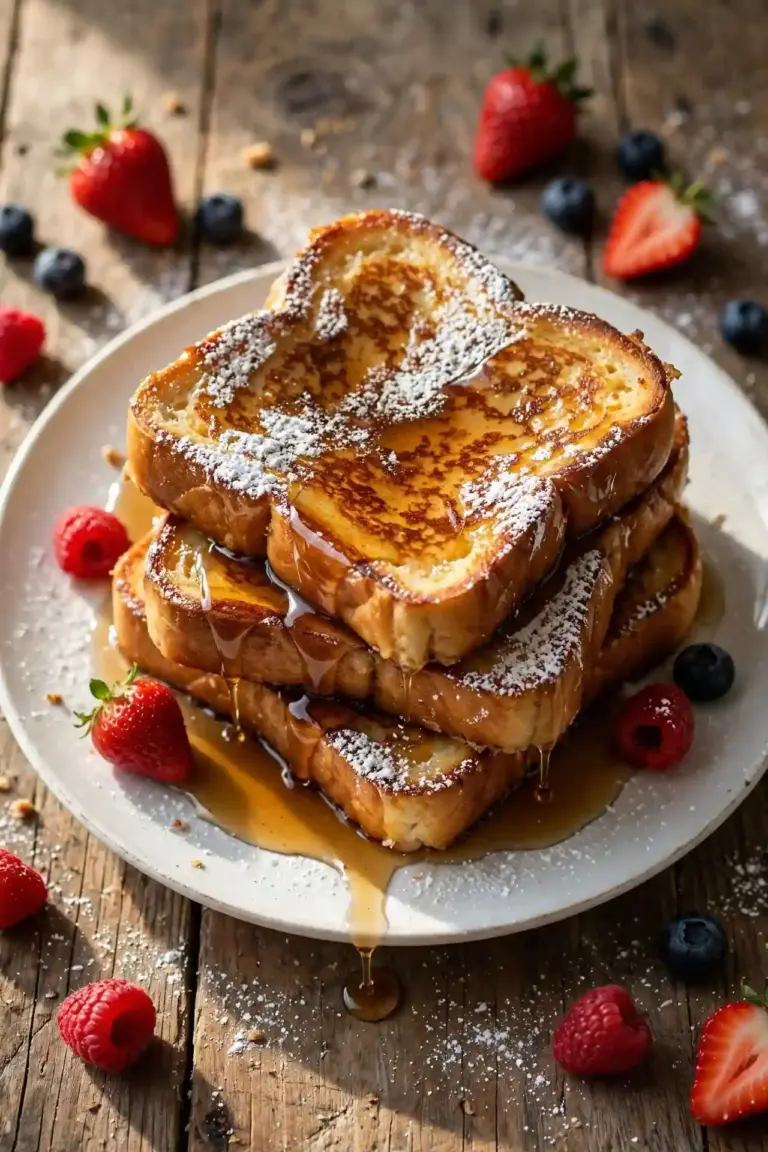
Cheesy Hashbrown Casserole That Actually Holds Together
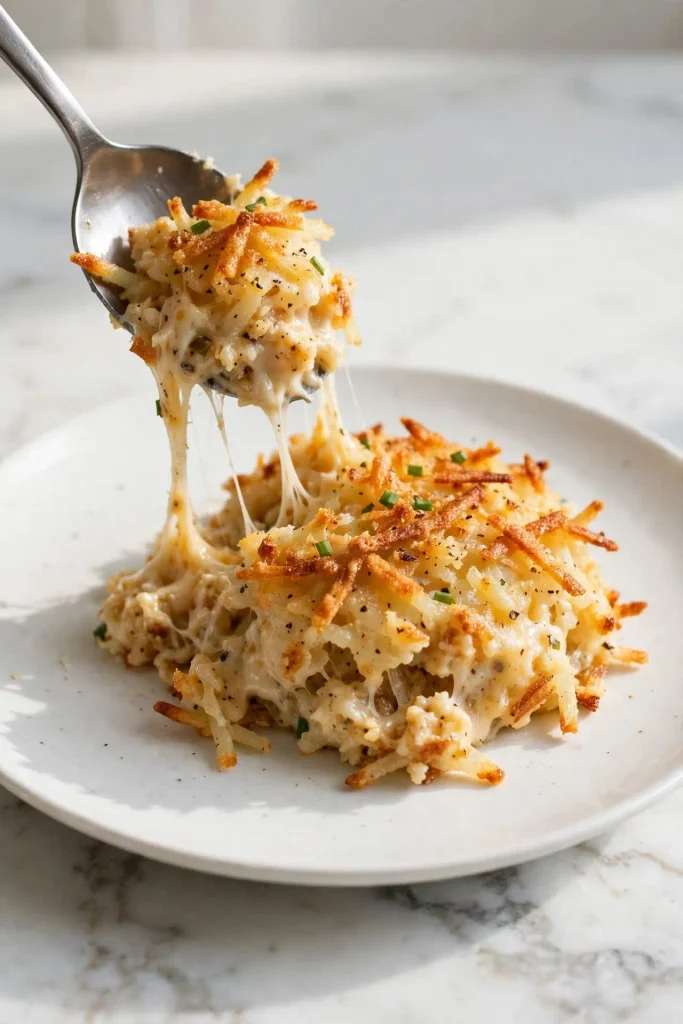
There’s a specific kind of disappointment that comes from cutting into a hashbrown casserole and watching it slide apart into a watery mess. I’ve made that mistake more than once, usually because I skipped draining the potatoes properly or got impatient with the bake time. This version fixes both problems, and the result is a dish that slices clean, tastes rich without being heavy, and disappears fast at any table.
Hashbrown casserole is one of those dishes that shows up at potlucks, holiday breakfasts, and weeknight dinners because it works for all three. It’s built from frozen shredded potatoes, a creamy binder, plenty of cheese, and a crunchy topping that contrasts against the soft interior. You can have it prepped the night before and in the oven the next morning, which is why so many people lean on it during busy holiday stretches. The version below uses a homemade cream base instead of canned soup, so the flavor is cleaner and less salty than the classic potluck version.
Why You’ll Love This Hashbrown Casserole
- No canned soup required. The sauce is made from real butter, flour, and milk, so you control the salt and skip the tinny aftertaste some people notice in the classic version.
- Freezer-friendly before or after baking. You can assemble it up to two days ahead and refrigerate it, or freeze the baked leftovers in portions for later.
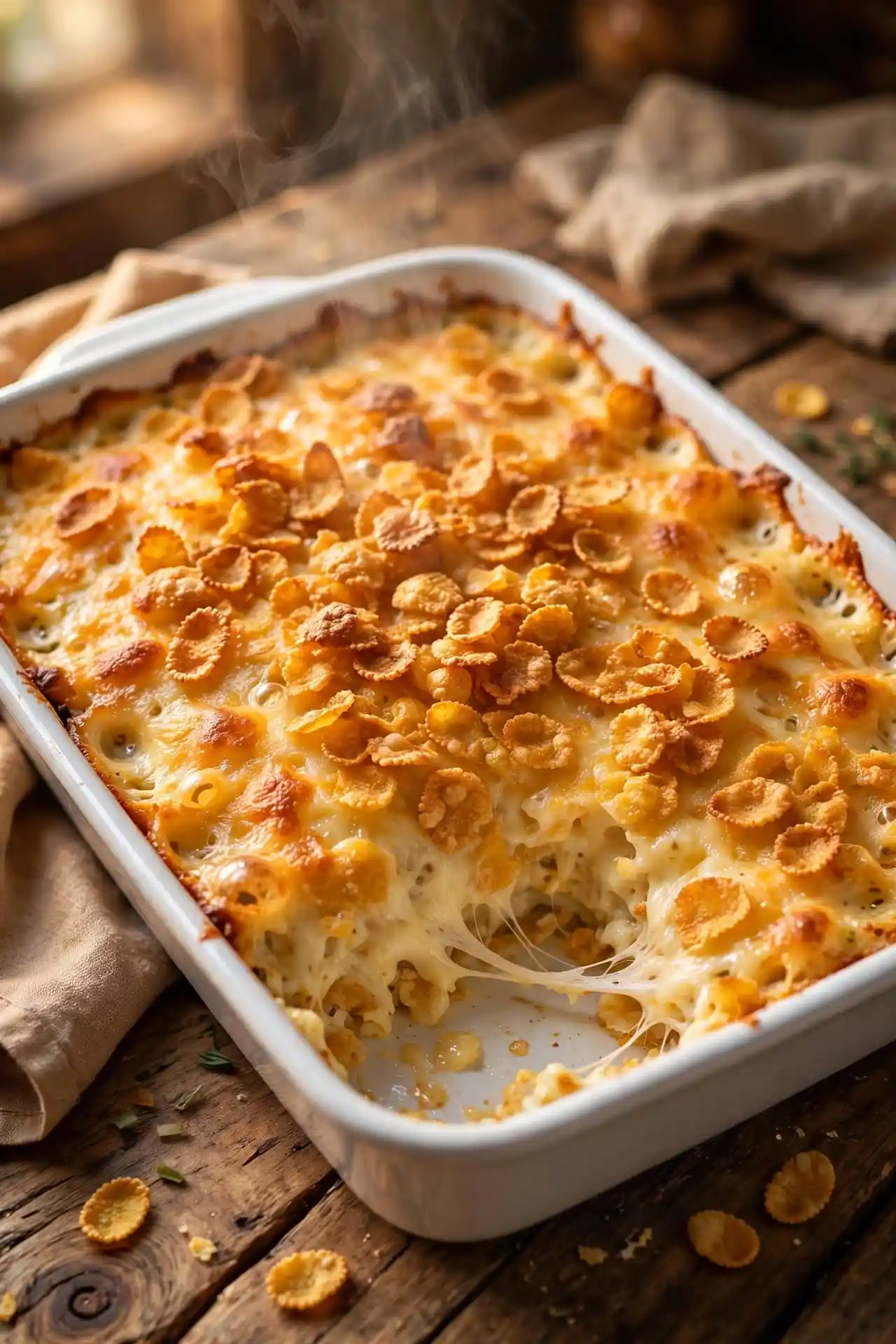
- Crispy top, creamy inside every time. The cornflake and butter topping stays crunchy even after resting, unlike a plain breadcrumb topping that goes soft.
- Feeds a crowd without much effort. One 9×13 dish serves ten to twelve people, and the prep work is mostly stirring and layering.
- Works for breakfast or dinner. Add cooked ham or sausage and it becomes a main dish; leave it as is and it’s a hearty side for baked chicken or ham.
Ingredients You’ll Need
Recipe Timing
| Detail | Info |
|---|---|
| Servings | 10-12 |
| Difficulty | Easy |
| Course | Side Dish / Breakfast |
| Cuisine | American |
| Prep Time | 20 minutes |
| Cook Time | 45 minutes |
| Rest Time | 5 minutes |
| Total Time | 70 minutes |
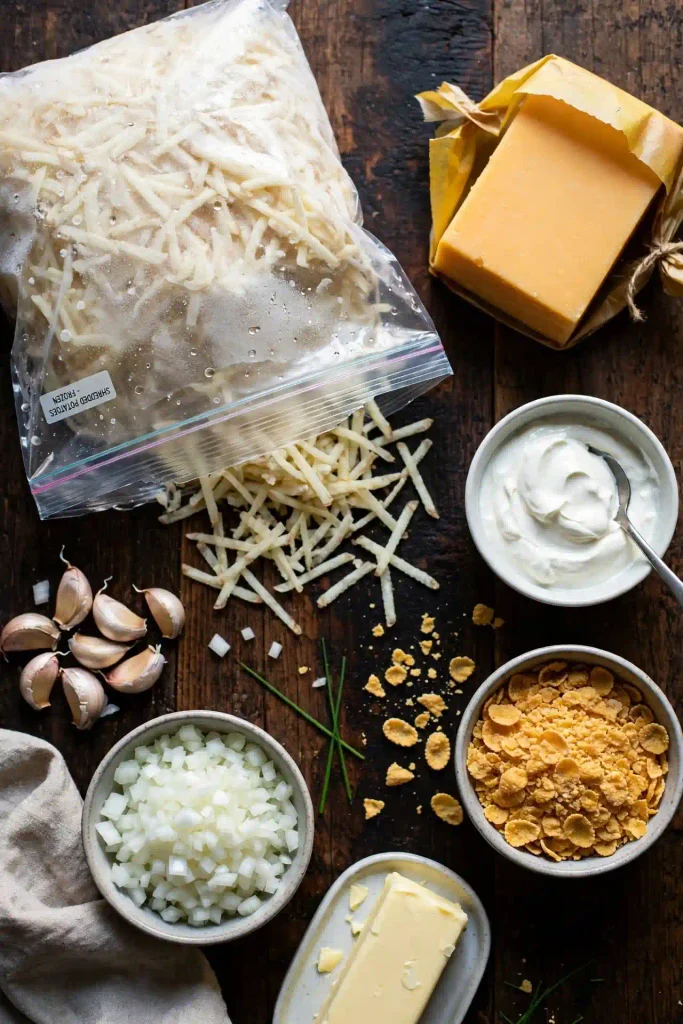
For the potatoes, grab a bag of frozen shredded hashbrowns and let them sit out for about 20 minutes before you start. They need to be mostly thawed so the casserole doesn’t turn watery in the oven. If you only have the diced or cubed frozen potatoes, those work too, but the texture will be chunkier rather than soft and cohesive.
- Frozen shredded hashbrowns (30 oz): the base of the dish. Thaw partially and pat dry with a towel if they feel very wet.
- Unsalted butter (6 tbsp, divided): half goes into the sauce, half into the topping. Unsalted lets you control the seasoning.
- All-purpose flour (3 tbsp): thickens the homemade sauce so it clings to the potatoes instead of pooling at the bottom.
- Whole milk (2 cups): gives the sauce body. Low-fat milk works but the sauce will be thinner.
- Sour cream (1 cup): adds tang and creaminess. Full-fat holds up better during baking than light versions.
- Sharp cheddar cheese (2 1/2 cups, shredded, divided): sharp cheddar gives more flavor than mild, and shredding it yourself melts smoother than pre-shredded bags, which contain anti-caking starch.
- Yellow onion (1 small, diced): adds savory depth. Sauté it first so it doesn’t stay raw and sharp in the finished bake.
- Garlic (2 cloves, minced): rounds out the onion flavor.
- Salt and black pepper: season to taste, keeping in mind the cheese already adds saltiness.
- Cornflakes (2 cups, crushed): the classic crunchy topping. Crush them by hand so you keep some texture rather than turning them to dust.
Allergen & Dietary Disclosure
This recipe contains dairy (butter, milk, sour cream, cheese) and gluten (flour, cornflakes may contain barley malt). For a gluten-free version, swap the flour for a 1:1 gluten-free blend and check that your cornflakes are labeled gluten-free, since some brands use malt flavoring. For a lighter version, you can use reduced-fat sour cream and milk, though the sauce will be slightly thinner.
Equipment Needed
- 9×13-inch baking dish: standard size for even cooking; glass or ceramic both work.
- Large skillet: for sautéing the onion and building the sauce in one pan.
- Whisk: keeps the sauce smooth and prevents flour clumps.
- Box grater: if shredding your own cheese, this melts more evenly than pre-shredded.
- Large mixing bowl: for combining the potatoes with the sauce before it goes into the dish.
Step-by-Step Directions
Step 1: Prep the Potatoes
Spread the partially thawed hashbrowns on a clean kitchen towel and pat them dry. Excess moisture is the main reason this casserole turns soupy, so don’t skip this. Set them aside in a large bowl.
Step 2: Preheat and Prep the Dish
Preheat your oven to 375°F. Butter a 9×13-inch baking dish so nothing sticks to the corners once it bakes down.
Step 3: Sauté the Onion and Garlic
Melt 2 tablespoons of butter in a large skillet over medium heat. Add the diced onion and cook until it turns soft and translucent, about 4 minutes. Add the garlic and cook for another 30 seconds, just until fragrant. Chef’s Note: Cooking the onion first instead of adding it raw removes the sharp bite and lets the natural sweetness come through in the finished dish.
Step 4: Build the Sauce
In the same skillet, melt 2 more tablespoons of butter, then whisk in the flour. Cook for about 1 minute, stirring constantly, until it smells slightly nutty and loses its raw flour smell. Slowly pour in the milk while whisking to avoid lumps. Keep whisking over medium heat until the sauce thickens enough to coat the back of a spoon, roughly 4 to 5 minutes.
Step 5: Combine the Sauce, Cream, and Cheese
Remove the skillet from heat and stir in the sour cream, 2 cups of the shredded cheddar, salt, and pepper. Chef’s Note: Adding the cheese off the heat keeps it from turning grainy, which happens when cheese is melted at too high a temperature for too long.
Step 6: Mix Everything Together
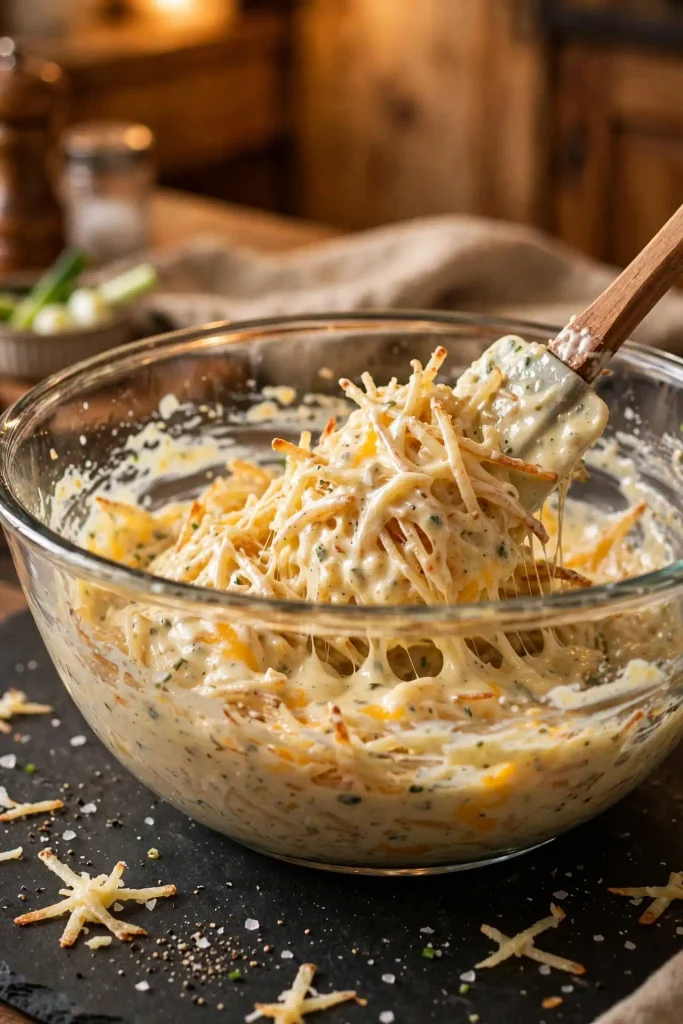
Pour the sauce mixture over the dried hashbrowns in the large bowl. Fold everything together with a spatula until the potatoes are evenly coated. Transfer the mixture into the prepared baking dish and spread it into an even layer.
Step 7: Make the Topping and Bake
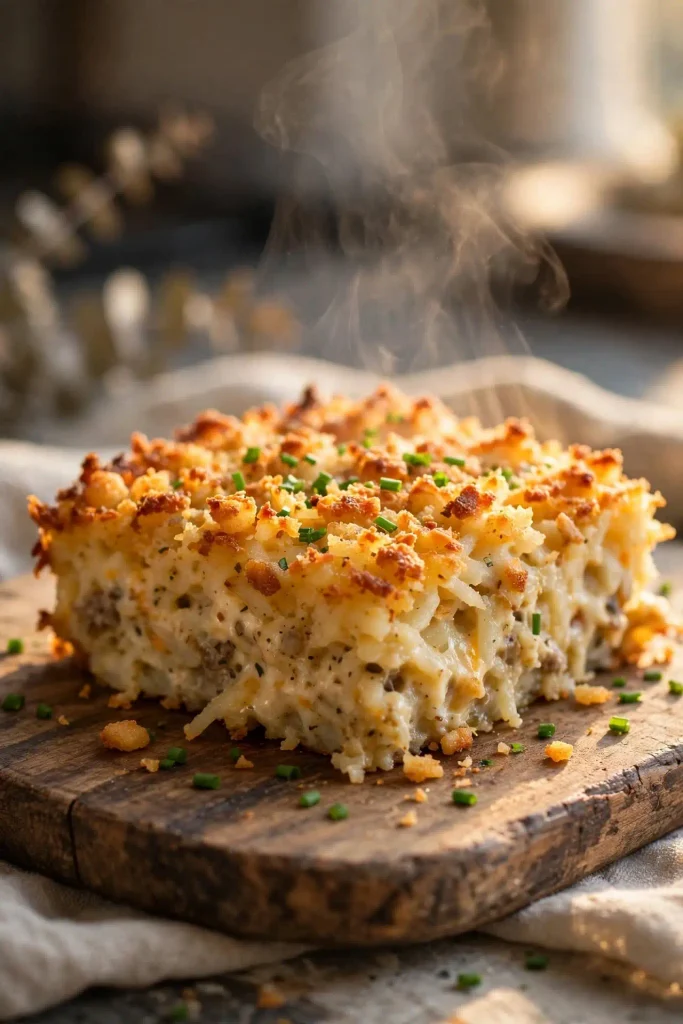
Melt the remaining 2 tablespoons of butter and toss it with the crushed cornflakes and remaining 1/2 cup of cheddar. Scatter this evenly over the top of the casserole. Bake uncovered for 40 to 45 minutes, until the top is golden brown and the edges are bubbling. Chef’s Note: If the topping browns too fast before the center is hot, tent the dish loosely with foil for the last 10 minutes.
Step 8: Rest and Serve
Let the casserole rest for 5 minutes before serving. This short rest lets the sauce set slightly so your slices hold together instead of running.
Common Mistakes & Troubleshooting
| Problem | Cause | Solution |
|---|---|---|
| Casserole turns watery | Potatoes weren’t thawed and dried before mixing | Pat frozen hashbrowns dry with a towel after partial thawing |
| Sauce looks grainy or separated | Cheese was added while the sauce was still boiling | Remove skillet from heat before stirring in cheese |
| Topping burns before center is hot | Oven runs hot or dish was placed too close to top element | Move rack to the center position and tent with foil if needed |
| Center stays cold after bake time | Casserole went into the oven straight from the fridge | Let assembled casserole sit at room temperature for 20 minutes before baking |
| Casserole falls apart when sliced | Cut immediately after removing from the oven | Rest for 5 minutes before serving to let it set |
Variations & Substitutions
- Spicy version: Stir in a diced jalapeño with the onion, or swap half the cheddar for pepper jack.
- Loaded breakfast version: Add 1 cup of cooked, crumbled beef sausage or diced chicken sausage to the potato mixture before baking.
- Vegetarian-boosted: Mix in a cup of sautéed mushrooms or steamed broccoli for extra texture and nutrients.
- Lighter version: Use reduced-fat sour cream and 2% milk, and reduce the cheese to 2 cups total.
- Extra crunchy topping: Swap half the cornflakes for crushed potato chips for a saltier, crispier crust.
- Herb-forward version: Stir in 2 tablespoons of chopped fresh chives or parsley right before serving for a fresh contrast to the richness.
Serving Suggestions
- Serve alongside baked ham or roasted chicken for a holiday-style plate.
- Pair with scrambled eggs and fresh fruit for a weekend breakfast spread.
- Add a simple green salad with vinaigrette to cut through the richness.
- Top individual servings with sliced green onions or a spoonful of extra sour cream.
- Serve with hot sauce on the side for anyone who wants more kick.
- Pair with grilled sausages for a backyard cookout side dish.

Tips for the Best Results
- Shred your own cheese. Pre-shredded bags are coated in cellulose to prevent clumping, and that same coating keeps the cheese from melting as smoothly into the sauce.
- Don’t skip drying the potatoes. This single step prevents the most common failure with this dish.
- Let it rest before slicing. Even five minutes makes a visible difference in how clean your servings look.
- Use a light hand with salt. Between the cheese and the sour cream, this dish already carries plenty of sodium.
- Check doneness by looking for bubbling at the edges, not just a golden top, since the topping can brown before the center is fully hot.
Storage Tips
Refrigerator
Store leftovers in an airtight container for up to 4 days. The topping will soften slightly but the flavor stays intact.
Freezer
You can freeze the baked casserole in a freezer-safe container for up to 2 months. For best texture, freeze it before adding the cornflake topping, then add the topping fresh when you’re ready to bake.
Reheating
Reheat individual portions in the microwave for 1 to 2 minutes, or warm the whole dish in a 350°F oven for 15 to 20 minutes covered with foil, removing the foil for the last 5 minutes to re-crisp the top.
Nutrition Information
Per serving (based on 12 servings): Calories: 310, Protein: 9g, Carbs: 22g, Fiber: 1g, Sugar: 3g, Fat: 20g, Saturated Fat: 12g, Cholesterol: 55mg, Sodium: 420mg, Vitamin C: 8mg, Calcium: 210mg, Iron: 1mg, Potassium: 380mg.
Nutrition values are approximate and may vary based on brands and portion sizes.
Why This Recipe Works
I’ve made this version of hashbrown casserole through several rounds of testing, adjusting the sauce ratio until it stayed thick enough to hold the potatoes together without turning gluey. The key change from most versions is skipping canned condensed soup entirely. A simple roux-based sauce gives you control over salt and thickness, and it avoids the slightly metallic aftertaste some people notice with canned soup bases.
Using sharp cheddar instead of mild also matters more than it might seem. Sharp cheddar has a lower moisture content and a more pronounced flavor, so you get more taste per cup without needing to add extra cheese. The exact bake time of 40 to 45 minutes at 375°F consistently produces a set center and a topping that browns without burning, based on repeated testing in a standard home oven.
Frequently Asked Questions
Can I make hashbrown casserole ahead of time?
Yes, you can assemble the full casserole up to 2 days ahead and store it covered in the refrigerator before baking. Let it sit at room temperature for about 20 minutes before it goes into the oven so it bakes evenly instead of staying cold in the center.
Why did my casserole turn out watery?
The most common cause is frozen hashbrowns that weren’t thawed and dried before mixing. Frozen potatoes release a lot of water as they cook, and if that moisture isn’t removed beforehand, it pools at the bottom of the dish. Always pat the potatoes dry with a towel after they’ve partially thawed.
Can I use fresh potatoes instead of frozen?
You can, though it takes more prep work. Shred fresh russet potatoes, rinse them to remove excess starch, then squeeze out as much liquid as possible with a clean towel before using them in place of the frozen hashbrowns.
How do I know when the casserole is fully cooked?
Look for bubbling at the edges of the dish and a golden brown, firm topping. If you want to check the center, insert a knife; it should come out hot to the touch with no cold spots.
Is this recipe safe for someone with a dairy allergy?
No, this recipe relies heavily on dairy through the butter, milk, sour cream, and cheese, so it isn’t suitable for a dairy allergy without significant substitutions. Plant-based butter, milk, and cheese alternatives can be swapped in, though the flavor and texture will change noticeably.
Conclusion
Hashbrown casserole earns its spot at so many tables because it’s forgiving, filling, and easy to make ahead. Once you’ve dried your potatoes properly and let the homemade sauce set up right, you get a dish that slices clean and tastes better than the canned-soup version most people grew up with. This hashbrown casserole holds up well for leftovers too, so don’t hesitate to make the full batch even for a smaller group.
Cheesy Hashbrown Casserole
Ingredients
Method
- Pat thawed hashbrowns dry with a towel and set aside.
- Preheat oven to 375°F and butter a 9×13-inch baking dish.
- Sauté onion in 2 tbsp butter over medium heat until soft, then add garlic for 30 seconds.
- Melt 2 tbsp butter in the same pan, whisk in flour, cook 1 minute, then slowly whisk in milk until thickened.
- Off heat, stir in sour cream, 2 cups cheddar, salt, and pepper.
- Combine sauce with dried hashbrowns and spread into the prepared dish.
- Toss remaining melted butter with crushed cornflakes and remaining cheddar; scatter over top.
- Bake 40-45 minutes until golden and bubbling. Rest 5 minutes before serving.
Notes
- Freeze without the topping for best texture; add cornflakes fresh before baking.
- Shred your own cheese for smoother melting.
- Let the assembled dish sit at room temperature before baking if it came from the fridge.
- Rest before slicing to keep portions intact.