Classic French Toast Recipe (Crispy Outside, Soft Inside)
The first time I got French toast right, it was because I stopped rushing the soak. Most people dunk the bread for two seconds and wonder why the middle turns out gummy. Give it a real soak, ten to fifteen seconds a side for thick bread, and the custard actually gets into the crumb instead of sitting on the surface.
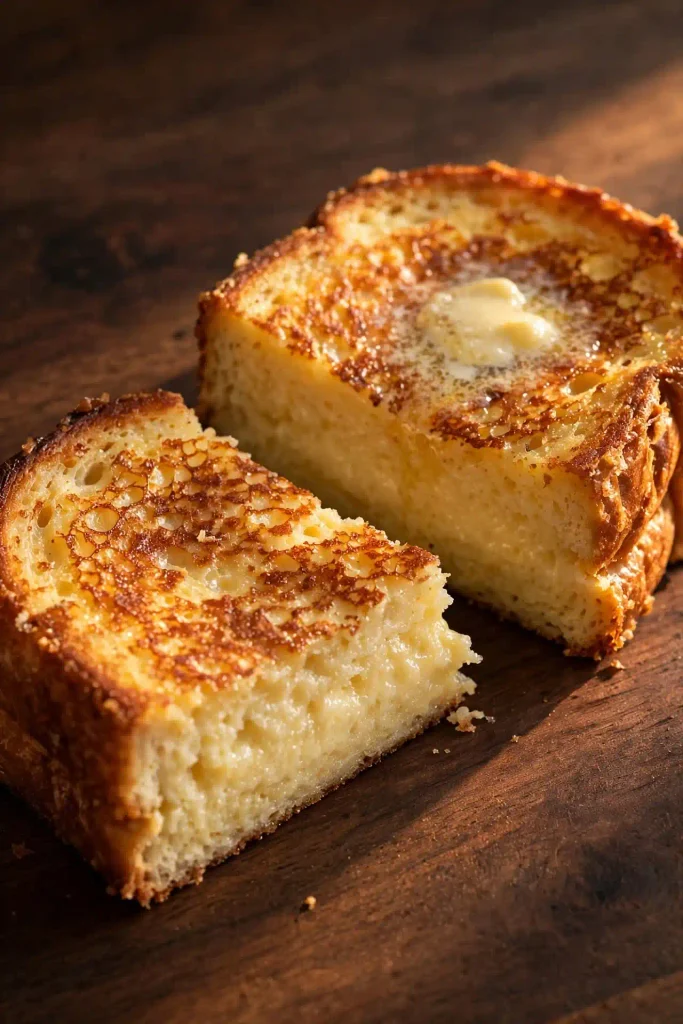
French toast recipe basics haven’t changed in a hundred years: bread, eggs, milk, a hot pan. What changes the result is the bread you pick and how much cinnamon and vanilla you’re willing to use. This version leans into a thick-cut loaf, a custard heavy enough to coat but not soak through, and butter in the pan instead of oil, because butter is what gives you that toasted, slightly nutty crust.
Why You’ll Love This French Toast Recipe
- Crisp edges, soft center: The combination of a proper soak time and medium heat gives you contrast in every bite instead of one uniform soggy texture.
- Ready in under 20 minutes: No resting overnight, no special equipment. Mix, dip, cook.
- Forgiving with bread choice: Works with brioche, challah, or plain sandwich bread, so you don’t need to hunt down a specific loaf.
- Only 6 ingredients: Everything is probably already in your kitchen.
- Scales easily: Doubling the custard for a crowd doesn’t change the method at all.
Ingredients You’ll Need
Recipe Timing
| Detail | Time/Info |
|---|---|
| Servings | 4 (8 slices) |
| Difficulty | Easy |
| Course | Breakfast |
| Cuisine | American |
| Prep Time | 5 minutes |
| Cook Time | 15 minutes |
| Rest Time | None |
| Total Time | 20 minutes |
Pick bread that’s a day or two old if you can. Fresh bread is too soft and falls apart in the custard. If all you have is fresh bread, lay the slices out on the counter for 20 minutes to dry out a bit first.
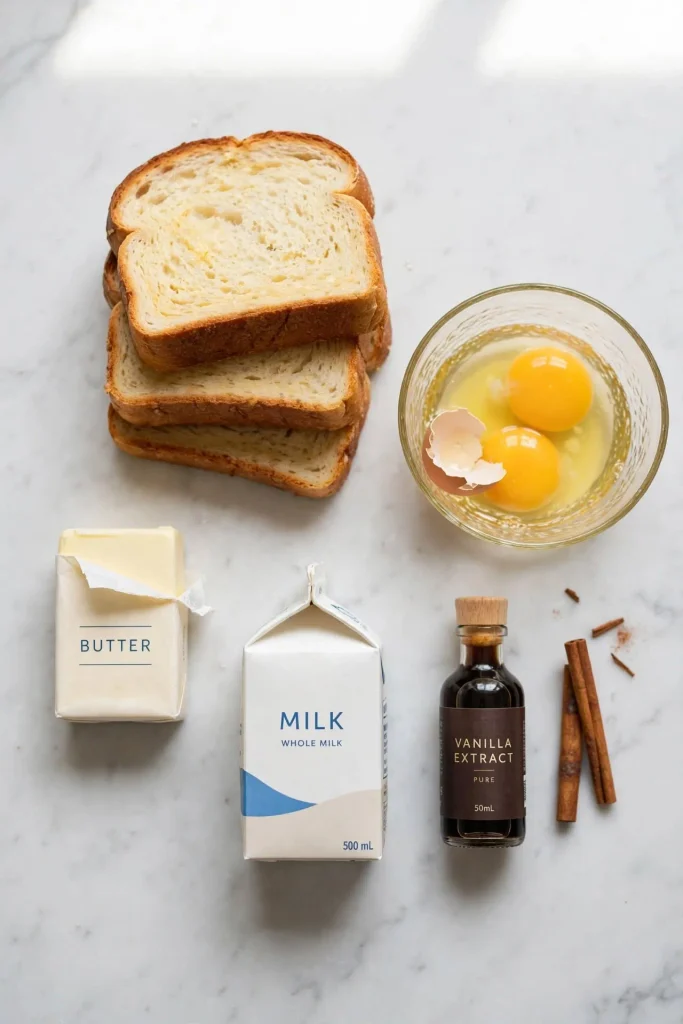
- Bread (8 thick slices, 3/4 inch): Brioche or challah work best because they’re rich enough to hold up to soaking. Day-old sandwich bread is a fine substitute if that’s what you have.
- Eggs (4 large): The base of the custard. Don’t skimp here, fewer eggs means a thinner coating that won’t crisp up properly.
- Whole milk (3/4 cup): Gives the custard body. Half-and-half works if you want it richer.
- Ground cinnamon (1 teaspoon): Adds warmth without overpowering the vanilla.
- Vanilla extract (1 teaspoon): Use real vanilla if you have it, the imitation stuff has a sharper, less rounded flavor.
- Unsalted butter (3 tablespoons, divided): For the pan. Butter browns and adds flavor that oil can’t replicate.
- Pinch of salt: Balances the sweetness and makes the egg flavor less flat.
Allergen & Dietary Disclosure
This recipe contains eggs, dairy (milk and butter), and gluten (bread). For an egg-free version, a flax egg (1 tablespoon ground flaxseed mixed with 3 tablespoons water per egg) won’t give you the same custard texture but will bind the coating. For dairy-free, swap in oat milk and a plant-based butter. For gluten-free, use a sturdy gluten-free sandwich bread, though it tends to soak up custard faster, so cut your dip time in half.
Step-by-Step Directions
Step 1: Make the Custard
Crack the eggs into a shallow dish wide enough to fit a slice of bread flat. Whisk in the milk, cinnamon, vanilla, and salt until fully combined and no streaks of egg white remain.
Step 2: Heat the Pan
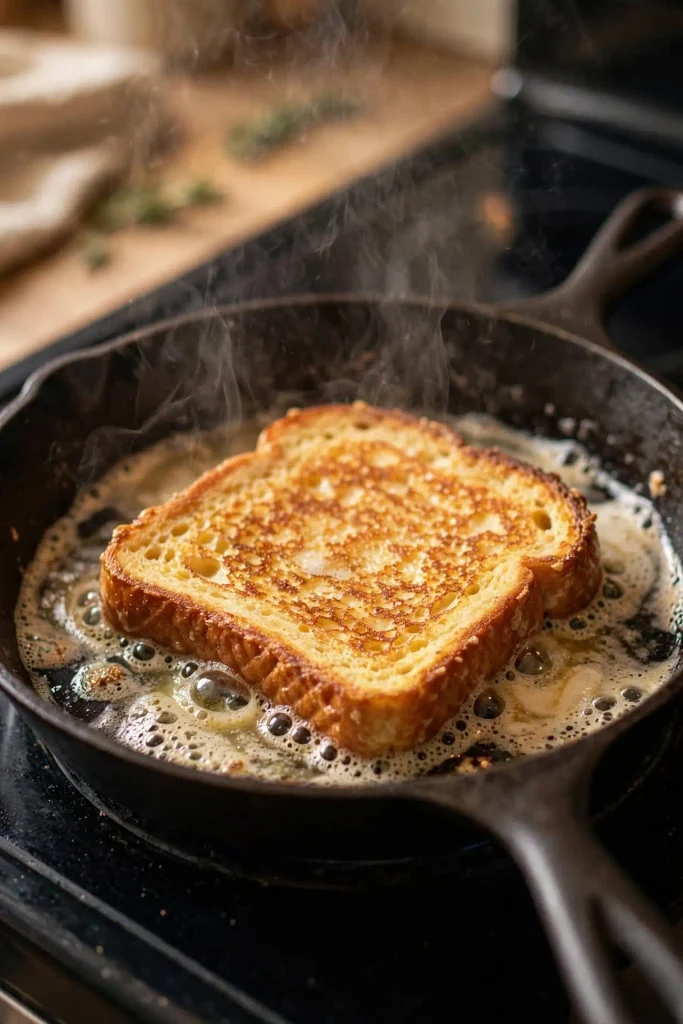
Set a large skillet or griddle over medium heat. Add 1 tablespoon of butter and let it melt and foam, but not brown, before adding bread. Chef’s Note: if the butter browns before you’ve added your first slice, the pan’s too hot. Wipe it out and start the butter again on lower heat.
Step 3: Soak the Bread
Dip each slice into the custard, 10 to 15 seconds per side for thick bread, less for thinner slices. Let the excess drip off before moving it to the pan. Don’t stack soaked slices, they’ll stick together.
Step 4: Cook the First Side
Lay the slice in the hot pan. Cook for 3 to 4 minutes until the underside is deep golden brown and lifts easily with a spatula. If it’s still pale after 4 minutes, your heat is too low.
Step 5: Flip and Cook the Second Side
Flip once and cook another 3 minutes on the other side. Chef’s Note: resist the urge to flip more than once. Every flip lets heat escape and slows down browning.
Step 6: Check for Doneness
The toast is done when both sides are golden brown and the slice feels firm, not squishy, when pressed gently in the center. A raw, wet center means it needs another minute per side on slightly lower heat.
Step 7: Repeat with Remaining Slices
Add more butter to the pan between batches as needed. Chef’s Note: if the pan looks dry or the butter’s browned to dark specks, wipe it with a paper towel before adding fresh butter.
Step 8: Serve Immediately
French toast is best straight from the pan. If making a big batch, keep finished slices on a wire rack in a 200°F oven so they stay crisp instead of going soft on a stacked plate.
Common Mistakes & Troubleshooting
| Problem | Cause | Solution |
|---|---|---|
| Soggy, wet center | Bread soaked too long or heat too low | Cut soak time to 5-8 seconds for soft bread, raise heat slightly |
| Custard won’t stick, slides off | Bread too fresh or dense | Use day-old bread, or dry fresh slices in a low oven for 5 minutes first |
| Outside burns before inside cooks | Heat too high | Drop to medium-low and give it more time per side |
| Scrambled egg bits on the toast | Custard not whisked fully | Whisk until completely smooth before dipping, no visible egg white streaks |
| Toast turns rubbery when reheated | Overcooked initially or microwaved | Reheat in a toaster or oven instead of microwave |
Variations & Substitutions
- Stuffed French toast: Spread cream cheese or Nutella between two slices before dipping and cooking as a sandwich.
- Baked French toast: Arrange soaked slices in a baking dish and bake at 350°F for 20 minutes for a hands-off version that feeds a crowd.
- Pumpkin spice version: Swap cinnamon for 1/2 teaspoon pumpkin pie spice and add 2 tablespoons pumpkin puree to the custard.
- Dairy-free version: Use oat milk in place of whole milk and coconut oil in place of butter.
- Savory twist: Skip the cinnamon and vanilla, add a pinch of black pepper and a sprinkle of parmesan for a non-sweet version.
- Extra crispy version: Dip the soaked bread in crushed cornflakes before cooking for a crunchier crust.
Serving Suggestions
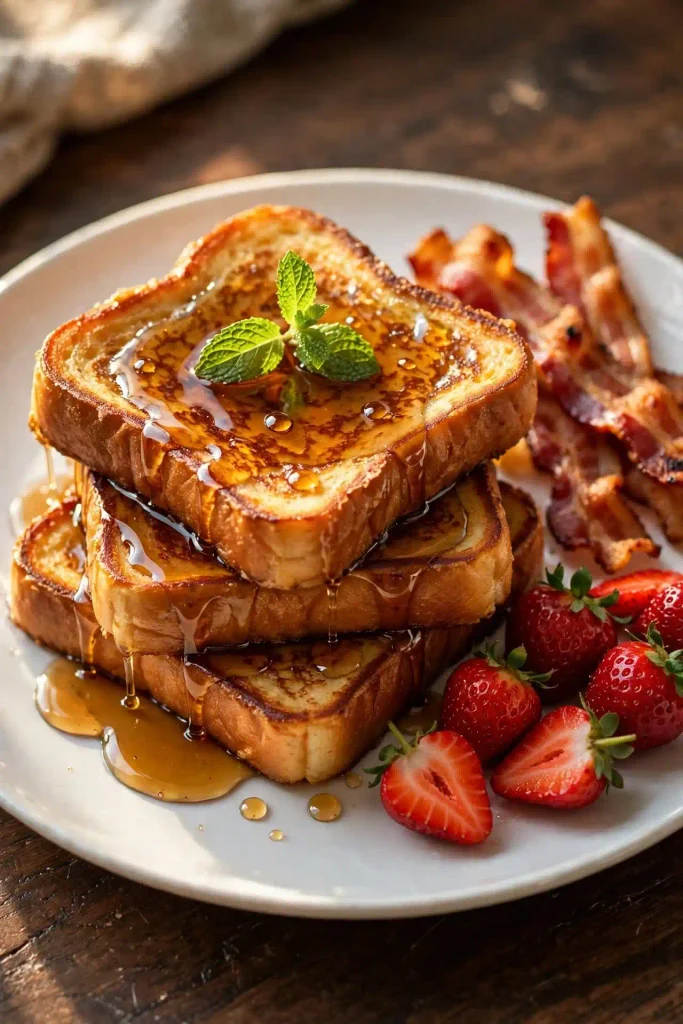
- Warm maple syrup poured generously over the top.
- Fresh berries (strawberries, blueberries) for a tart contrast to the sweetness.
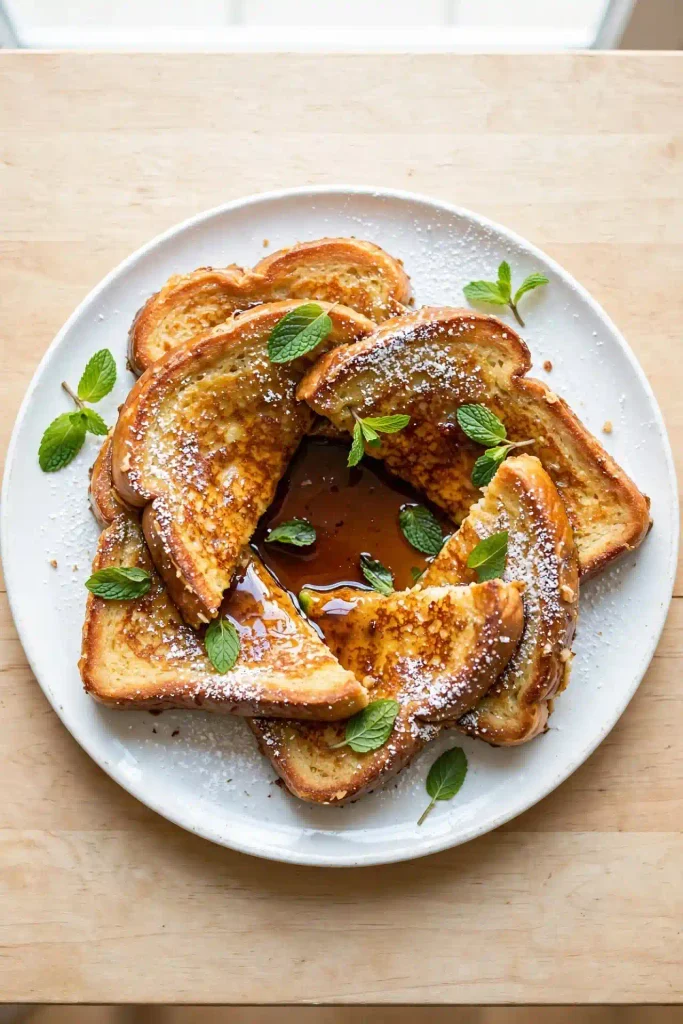
- A dusting of powdered sugar for presentation.
- Crispy bacon or breakfast sausage on the side for a savory-sweet plate.
- A dollop of whipped cream for special occasion breakfasts.
- Sliced bananas and a drizzle of peanut butter for a heartier version.
Tips for the Best Results
- Use day-old bread: Fresh bread absorbs too much custard and turns mushy instead of holding its shape.
- Don’t overcrowd the pan: Leave space between slices so heat circulates evenly and edges crisp instead of steam.
- Keep the heat at medium: High heat browns the outside before the inside sets, leaving you with a raw middle.
- Let the pan reheat between batches: A cooled pan means your second batch takes longer and browns unevenly.
- Warm your syrup: Cold syrup on hot toast cools everything down fast. Warm it in the microwave for 20 seconds first.
Storage Tips
Refrigerator
Let leftover French toast cool completely, then store in an airtight container for up to 3 days. Layer slices with parchment paper between them so they don’t stick together.
Freezer
Freeze cooled slices in a single layer on a baking sheet for an hour, then transfer to a freezer bag. They’ll keep for up to 2 months without getting freezer burn.
Reheating
Reheat frozen or refrigerated slices in a toaster or in a 350°F oven for 8 to 10 minutes until warmed through and the edges re-crisp. Microwaving works in a pinch but leaves the texture soft and slightly rubbery.
Nutrition Information
Per serving (2 slices):
| Nutrient | Amount |
|---|---|
| Calories | 310 |
| Protein | 11g |
| Carbs | 32g |
| Fiber | 1g |
| Sugar | 6g |
| Fat | 15g |
| Saturated Fat | 7g |
| Cholesterol | 195mg |
| Sodium | 380mg |
| Vitamin C | 0mg |
| Calcium | 120mg |
| Iron | 2mg |
| Potassium | 210mg |
Nutrition values are approximate and may vary based on brands and portion sizes.
Why This Recipe Works
I’ve made this exact ratio of eggs to milk more times than I can count, and it’s the point where the custard is rich enough to flavor the bread without turning it into pudding. Using whole milk instead of cream keeps it from feeling heavy, and the single teaspoon of vanilla is enough to round out the cinnamon without tasting like a candle.
The reason butter over oil matters here: butter’s milk solids brown as they cook, and that browning is what gives the crust its slightly nutty edge. Oil just cooks the outside without adding that layer of flavor. Cooking at medium heat rather than medium-high gives the custard time to set through the middle before the outside overcooks, which is the actual fix for the raw-center problem most people run into.
Frequently Asked Questions
Can I make French toast the night before?
You can prep the custard and store it covered in the fridge overnight, but don’t soak the bread until you’re ready to cook. Pre-soaked bread sitting overnight turns mushy and won’t hold together in the pan.
Why does my French toast turn out soggy in the middle?
This usually means the bread soaked too long or the pan wasn’t hot enough. Stick to a 10 to 15 second soak per side for thick bread, and make sure your skillet is fully preheated over medium heat before the first slice goes in.
Can I use non-dairy milk instead of whole milk?
Yes, oat milk and almond milk both work well as substitutes. Oat milk gives a slightly creamier result closer to whole milk, while almond milk makes for a thinner custard, so you may need a shorter soak time.
How do I know when French toast is fully cooked?
Press the center gently with a spatula. It should feel firm and spring back slightly. If it feels squishy or wet, give it another minute per side on slightly lower heat so the inside sets without burning the crust.
Is this recipe safe for egg allergies?
Traditional French toast relies on eggs for its custard base, so it’s not naturally egg-free. A flax egg substitute can bind a coating onto the bread, but the texture and flavor will be noticeably different from the classic version.
Conclusion
Good French toast comes down to two things: giving the bread enough time in the custard and keeping the pan at a steady medium heat. Once you’ve got that balance, this French toast recipe turns into one of those things you can make from memory, no measuring cups required. It holds up for a weekday breakfast just as well as a weekend brunch spread.
If you loved this recipe, save it to your breakfast Pinterest board so you can find it easily later!
Classic French Toast
Ingredients
Method
- Whisk eggs, milk, cinnamon, vanilla, and salt together in a shallow dish until smooth.
- Melt 1 tablespoon butter in a skillet over medium heat.
- Dip a bread slice into the custard for 10-15 seconds per side, letting excess drip off.
- Place in the skillet and cook 3-4 minutes until deep golden brown.
- Flip once and cook the second side for 3 minutes.
- Check that the center feels firm before removing from the pan.
- Repeat with remaining slices, adding more butter as needed.
- Serve hot with syrup and desired toppings.
Notes
- Day-old bread holds up better than fresh bread.
- Keep cooked slices warm on a rack in a 200°F oven while finishing the rest.
- Don’t stack soaked bread before cooking, it will stick together.
- Reheat leftovers in a toaster, not the microwave, to keep the crust crisp